Buying A Deep-Water Dock Home In North Palm Beach
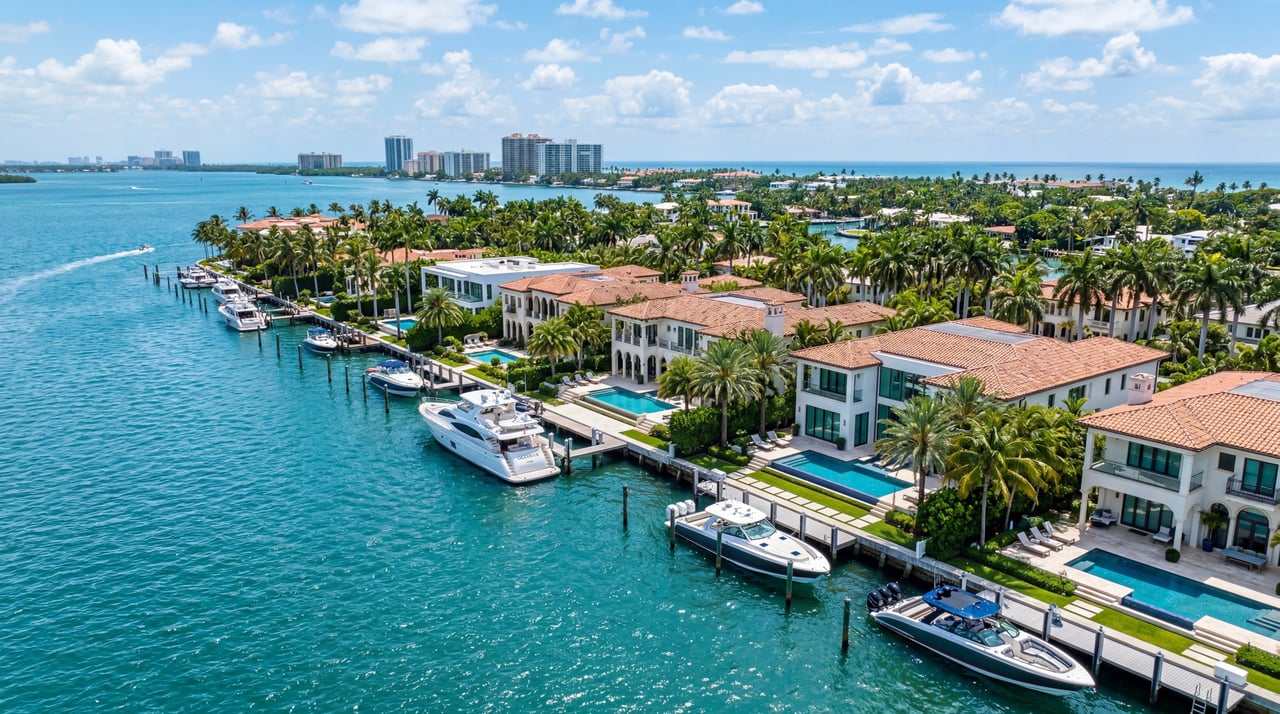
If you picture waking up in North Palm Beach, stepping onto your dock, and heading straight out for a day on the water, you are not alone. Buying a deep-water dock home here can deliver that lifestyle, but the right fit depends on much more than a listing calling a property “deep water.” This guide will help you understand what deep-water dock really means in North Palm Beach, what to verify before you buy, and how to compare different waterfront options with confidence. Let’s dive in.
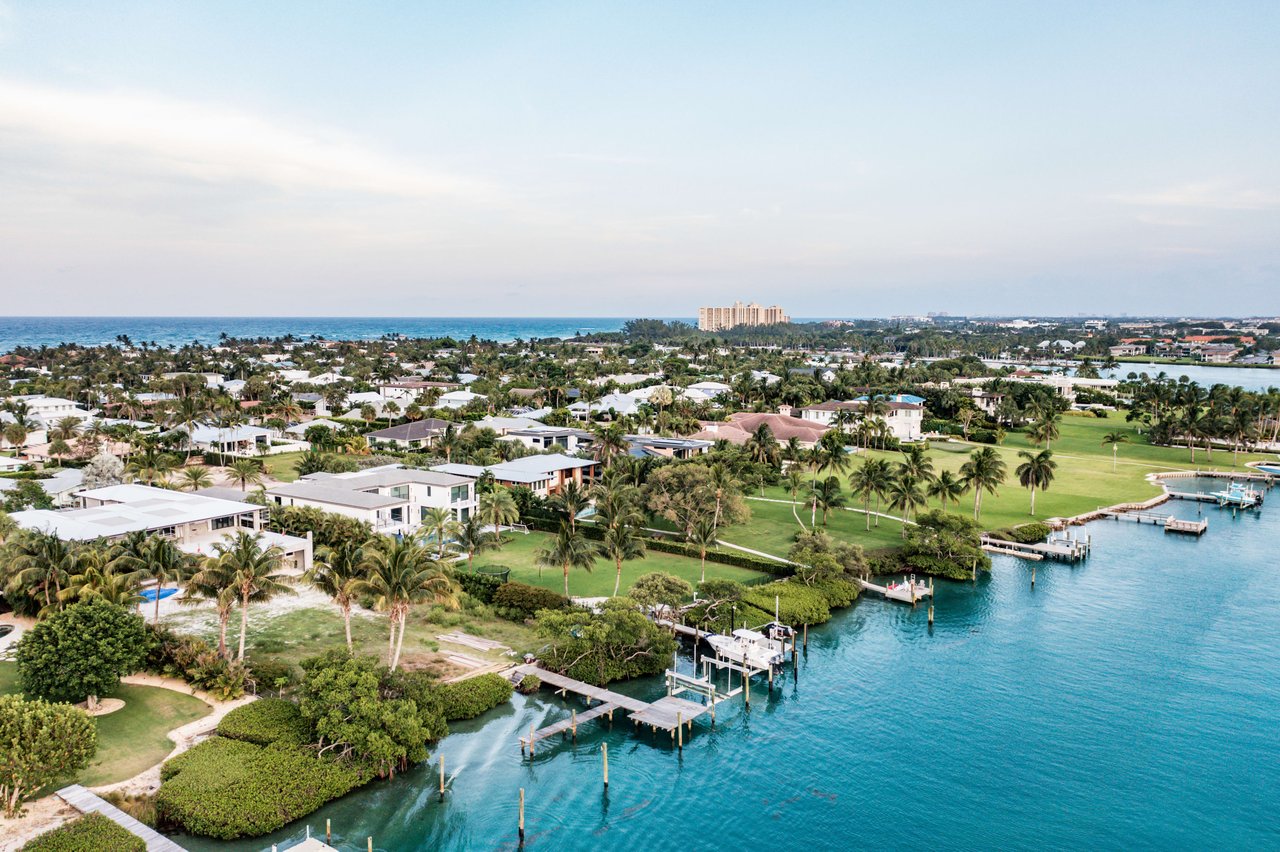
North Palm Beach is a boating-first village, and that matters when you are shopping for waterfront property. The village highlights boating, ocean fishing, public docks at Anchorage Park, and a Marine Unit that handles boating safety inspections, speed enforcement, and manatee-zone enforcement.
For you as a buyer, that means boating is not just a nice extra here. It is part of how the area functions. The real question is not simply whether a home sits on the water, but whether the water access works for your specific boat and how you plan to use it.
In North Palm Beach, deep water is best treated as a route test, not a marketing label. A property may have a dock, a lift, and attractive waterfront views, but that does not automatically mean it will handle your vessel with ease.
A true deep-water setup should work at low tide, not just on a perfect day. You want enough water depth for your boat’s draft, enough overhead clearance for its air draft, and enough width and turning room to move safely from the dock to open water.
NOAA’s electronic navigational charts and Coast Pilot materials are the official tools for understanding charted depths, bridge clearances, currents, and channel conditions. In practice, this means you should evaluate the entire boating route, not just the backyard dock.
One of the biggest mistakes buyers make is focusing only on the seawall or lift. Even if the dock itself looks ideal, the approach channel, basin, or connecting waterway may create limits.
A nearby example in the Little Lake Worth area shows why this matters. NOAA notes a privately marked and dredged approach channel with a reported controlling depth of 7 feet, plus a fixed bridge at the entrance with only 8 feet of clearance. That is a reminder that a waterfront address and a usable boating setup are not always the same thing.
If your boat has height, bridge clearance is just as important as water depth. Palm Beach County identifies several key nearby drawbridges along the Intracoastal Waterway route, including Donald Ross Road, PGA Boulevard, and Parker.
According to the Florida Atlantic Intracoastal Waterway bridge guide, the closed clearances are about 35 feet for Donald Ross and 25 feet for both PGA Boulevard and Parker above mean high water. If your boat exceeds those clearances, you may face route limits, waiting periods for openings, or the need to rethink where and how you keep the boat.
Bridge openings also affect day-to-day convenience. NOAA Coast Pilot lists Donald Ross and PGA Boulevard as opening on the hour and half-hour, while Parker opens on the quarter-hour and three-quarter hour.
That may sound minor at first, but it can shape your routine if you head out often. The bridge guide also notes that schedules can change because of maintenance, construction, weather, or special events, so it is smart to verify the current route before closing instead of relying on an older listing description.
North Palm Beach offers more than one kind of waterfront living. The best choice depends on the balance you want between boating access, home style, upkeep, and flexibility.
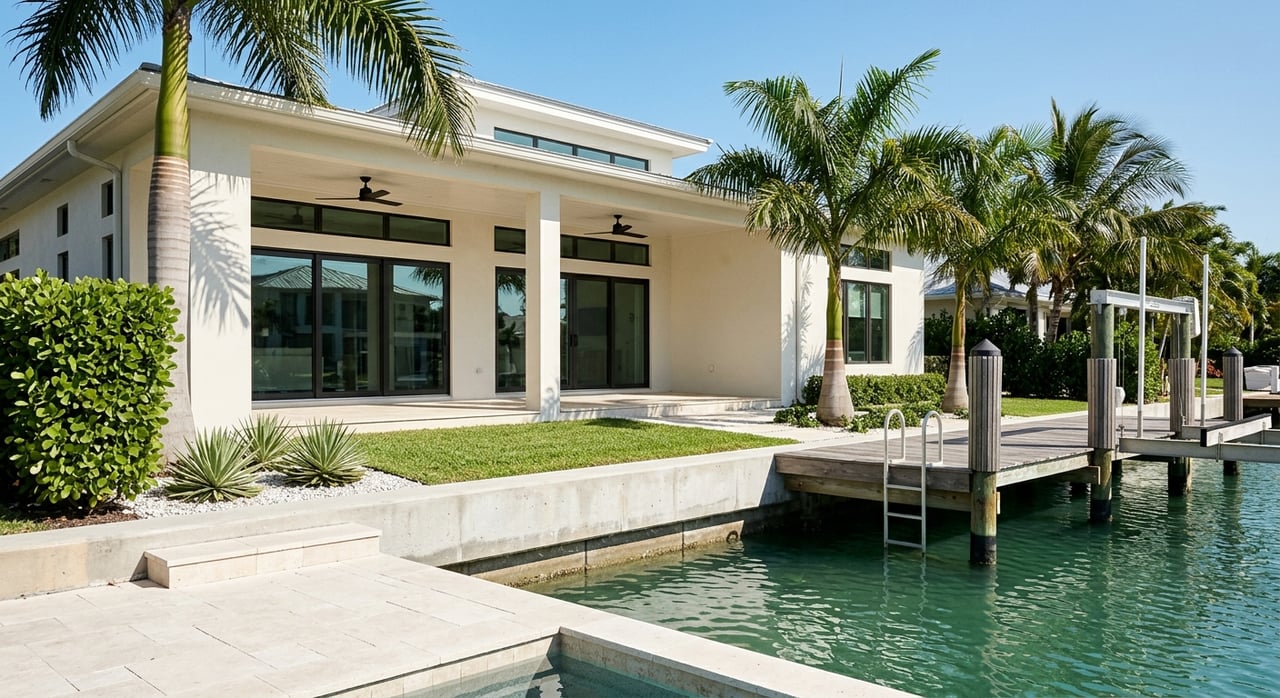
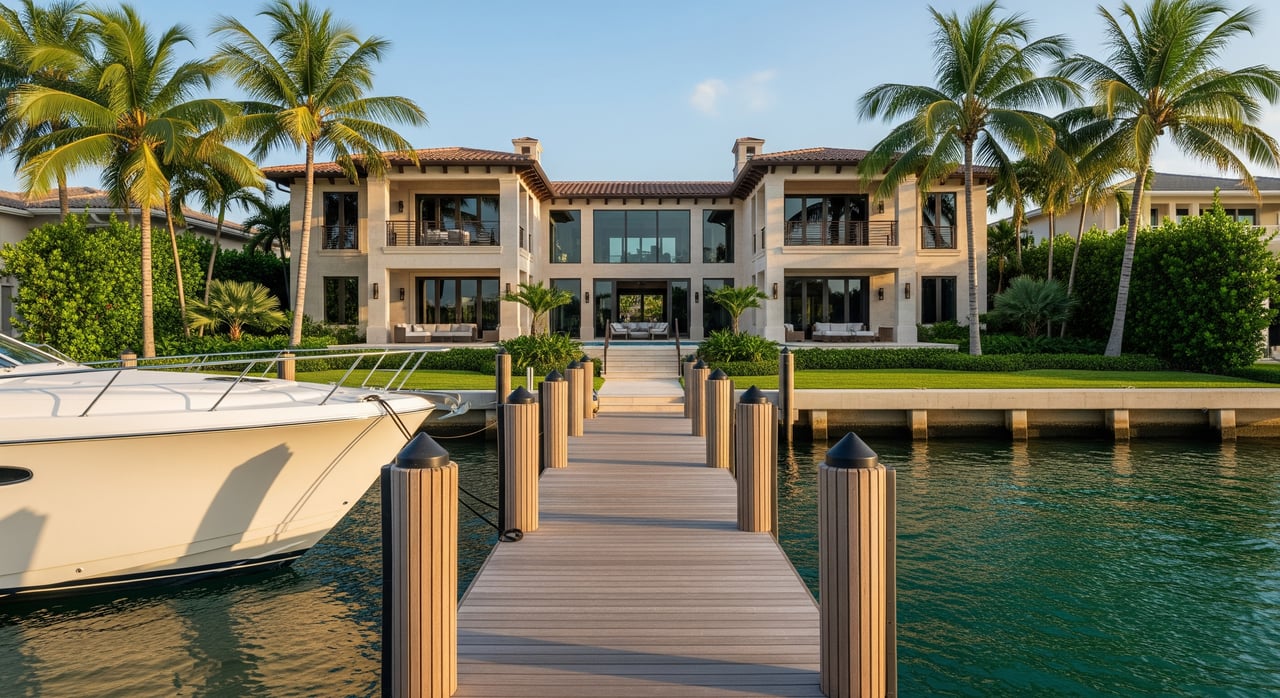
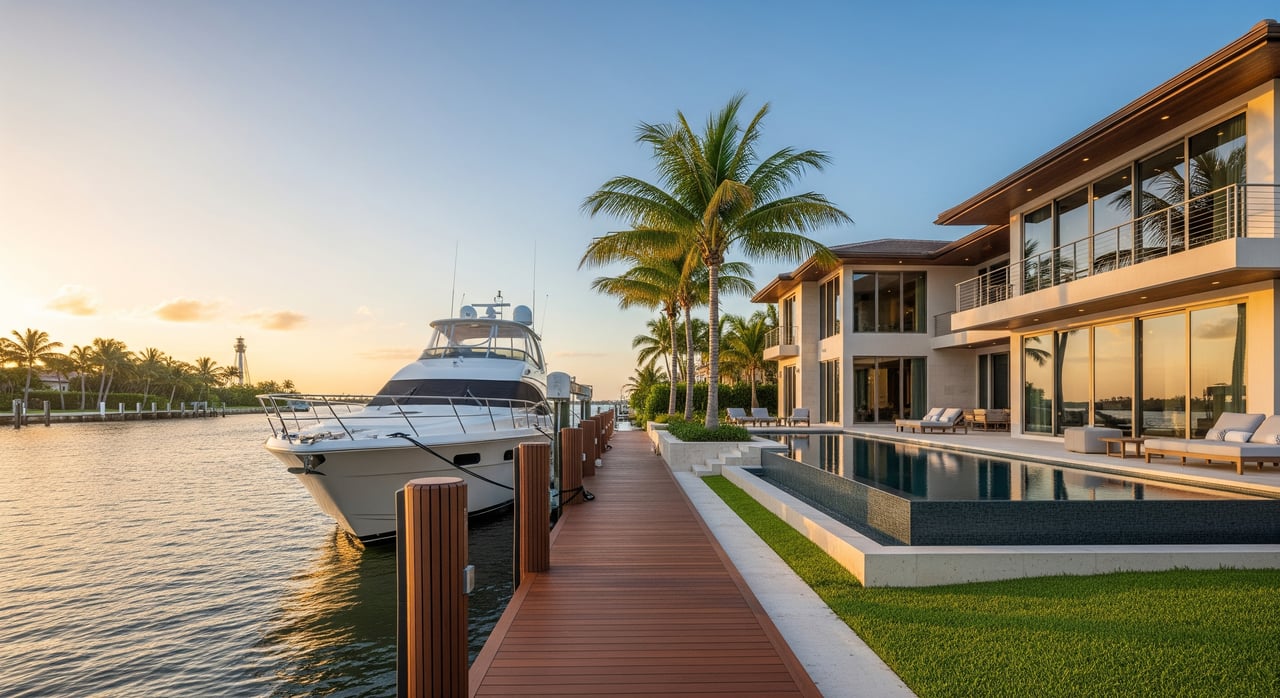
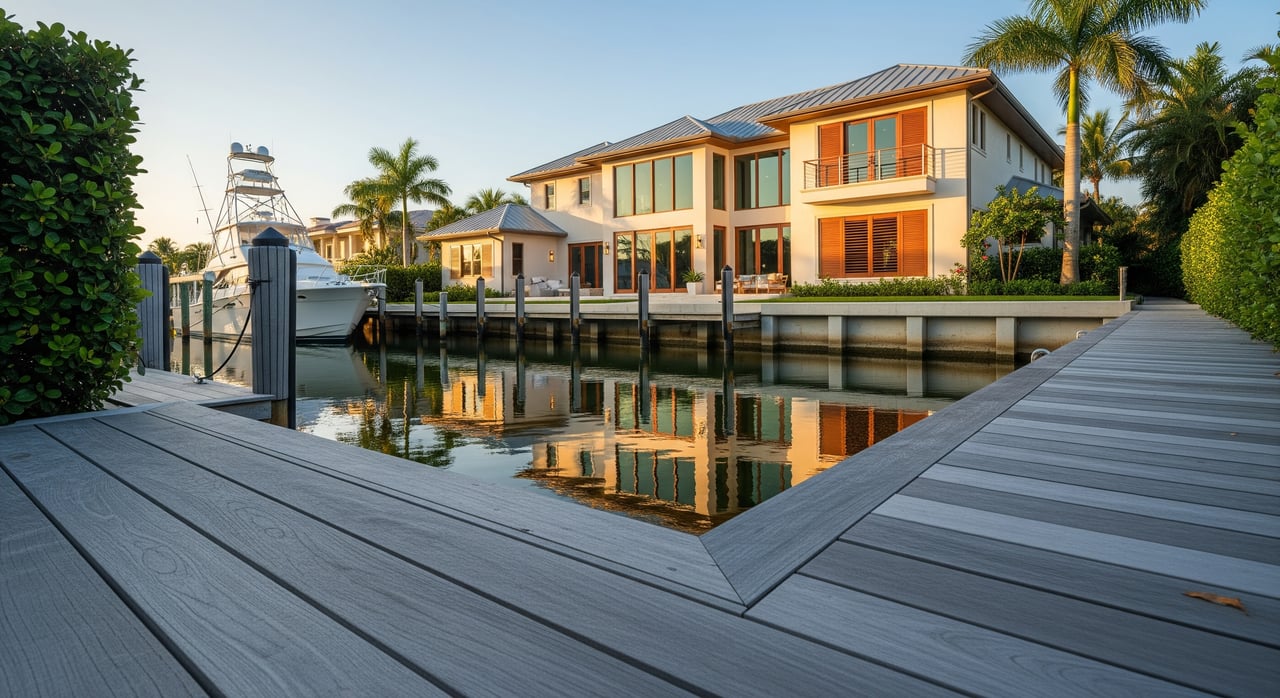
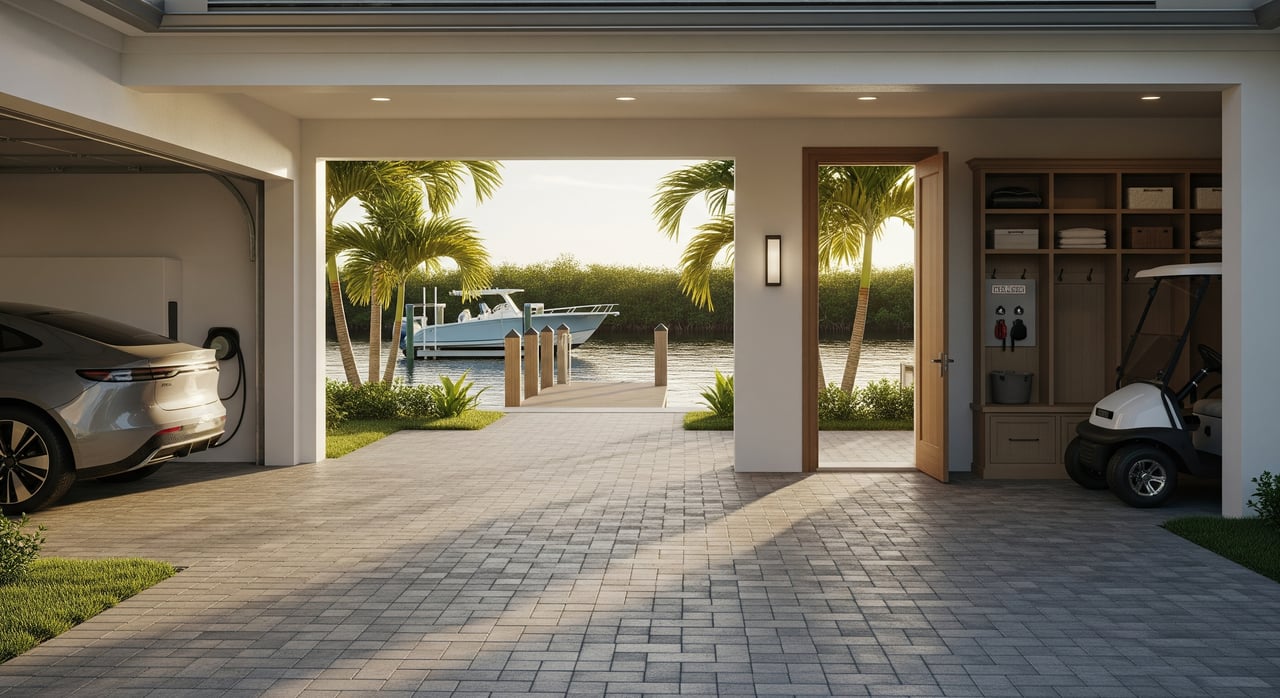
Estate-style single-family waterfront homes are often the dream purchase for buyers who want space, privacy, and direct dockage. These homes can offer a more seamless boat-to-home lifestyle, especially if you want to keep a larger vessel nearby.
Lost Tree Village is one example of this model. Its official materials describe a 450-acre community between the Atlantic Ocean and the Intracoastal Waterway with private docks, inland lakes, and 524 residences.
Traditional canal-front homes can also be a strong option, especially if you want direct waterfront living with a detached home and private dock. But this category calls for more property-by-property analysis.
The reason is simple: not every canal behaves the same. Waterway width, dock placement rules, turning radius, and legal dock dimensions can all affect whether a canal-front home is practical for your boat.
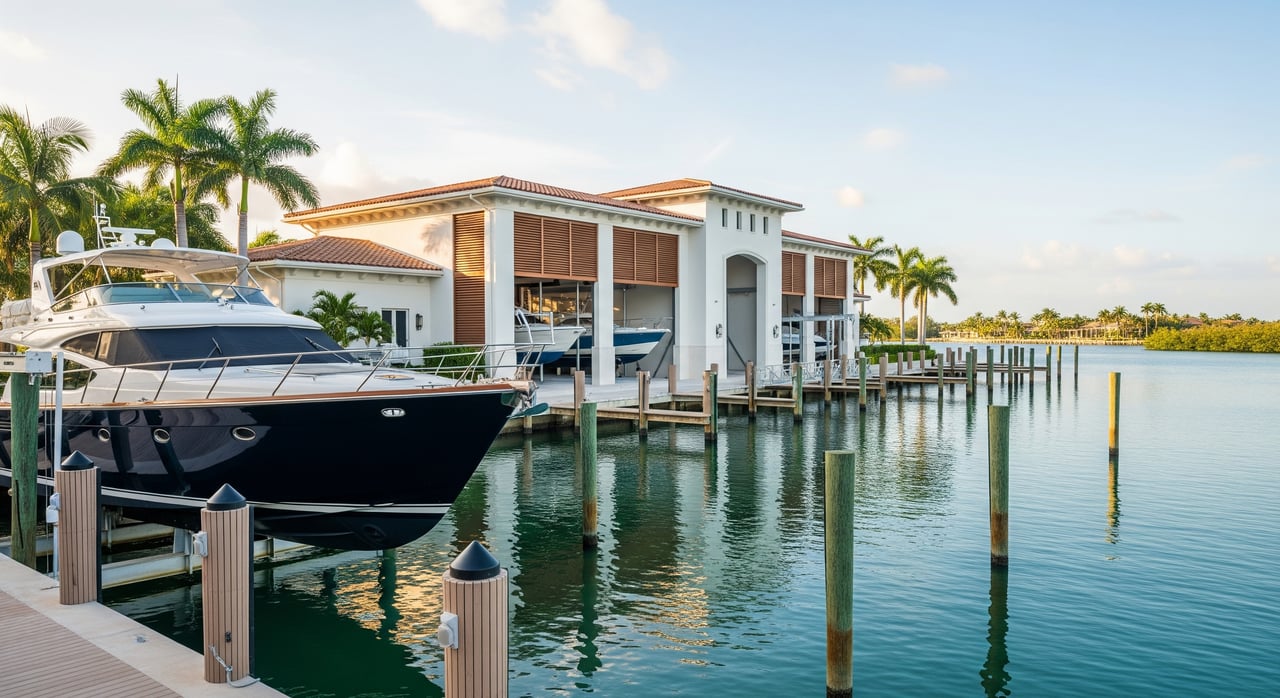
If you want boating access without taking on the full maintenance profile of a single-family waterfront property, marina-oriented condos and townhomes deserve a serious look. This setup can be appealing if you prefer lock-and-leave living or a second-home lifestyle.
Old Port Cove, particularly Harbor Village, is a clear example. The Harbor Village association states that the community includes condominium and townhouse buildings and has its own marina with 56 slips.
North Palm Beach’s dock and pier rules vary by waterway, and that can have a direct impact on what works at a given property. This is one reason you should never assume a current dock layout is ideal just because it exists.
Village code shows different extension limits depending on the waterbody. Piers may extend up to 20 feet in the North Palm Beach Waterway, 25 feet in West Lake, 40 feet in North Lake, and up to 25 percent of the waterway width in the Earman River.
Setbacks matter too. For waterfront lots with 50 feet or less of frontage, docks generally cannot sit within 5 feet of the side property line extended. For lots with more than 50 feet of frontage, that setback is generally 10 feet.
Those rules may sound technical, but they affect real-life usability. A dock may be legal in one waterway and less functional in another, or a lot may be attractive on paper but still awkward for boarding, turning, or storing the type of boat you own.
In the North Palm Beach Waterway, floating docks may extend up to 10 feet from the bulkhead face. But the village limits mooring at those extended floating docks to loading and unloading.
That is a good example of why the details matter. A feature that looks convenient in photos may not support full-time mooring in the way you expect.
When you are buying a deep-water dock home, your review period should cover more than the house itself. You also need to understand whether the dock, lift, seawall, and route to open water are legal, practical, and insurable.
North Palm Beach requires permits for docks, piers, mooring buoys, anchors, boat davits, and other boat-lifting devices. The village checklist for docks and boatlifts calls for a signed contract, a current boundary survey, an engineer-sealed overlay of the proposed work, and a DEP package.
Seawall work has its own checklist and may also require a boundary survey, engineer-sealed overlay, and drainage plans. If a structure was altered over time, you will want to confirm that the work was properly permitted and aligns with current standards.
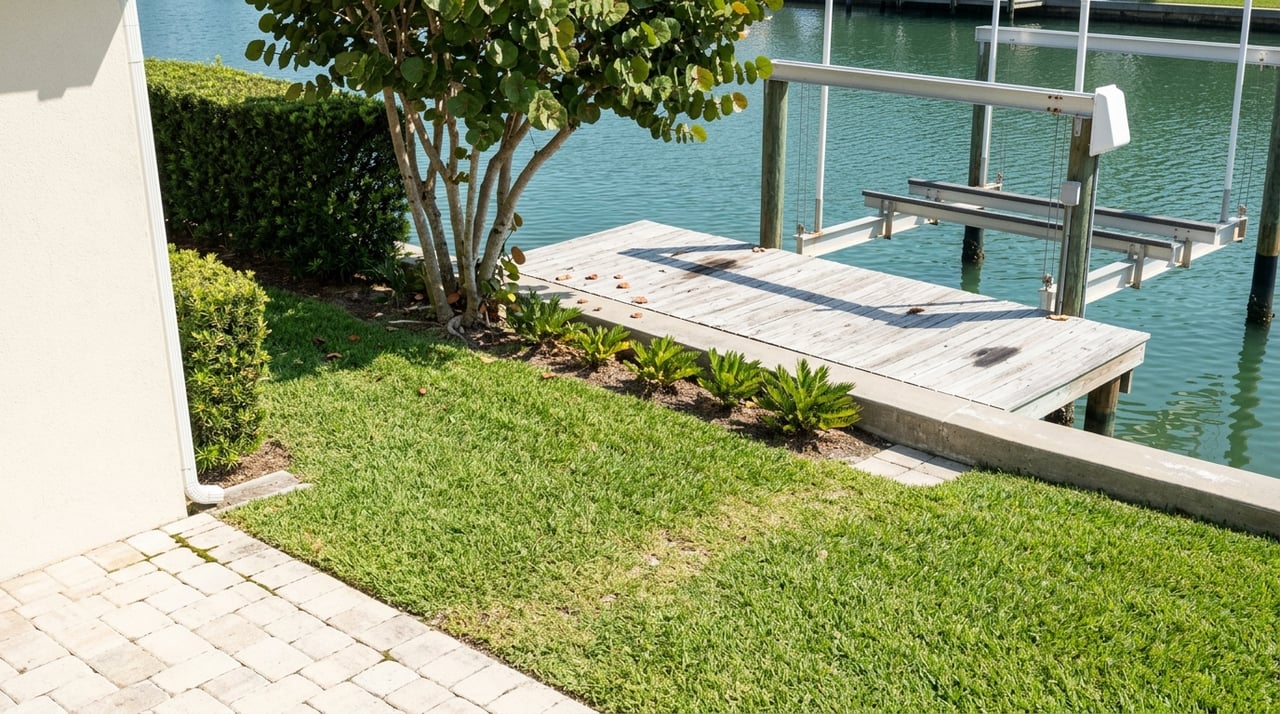
A beautiful waterfront home can still carry major future costs if the seawall or dock is near the end of its useful life. During due diligence, it is worth paying close attention to visible wear, past repairs, and whether lifts or adjacent structures appear well maintained.
That review helps you understand not only condition, but also future budgeting. In a boating-focused purchase, waterfront infrastructure is part of the home’s overall value.
Flood insurance deserves early attention. FEMA states that flood insurance is a separate policy, and homes in high-risk flood areas with government-backed mortgages are required to carry it.
For older homes, inspections can also affect underwriting. Citizens requires a four-point inspection for property-owner, dwelling, and mobile-home applications on properties more than 20 years old, and the Florida Office of Insurance Regulation says its updated Uniform Mitigation Verification Inspection Form is effective April 1, 2026 and remains valid for up to five years if no material changes are made.
When you compare waterfront homes in North Palm Beach, dockage should be viewed as a contributory feature, not a blanket premium. The Palm Beach County Property Appraiser emphasizes market value, comparable sales, and a January 1 valuation date.
In practical terms, that means value comes from how usable and transferable the waterfront setup is compared with similar properties in the same canal system or waterfront pocket. Water depth, permit status, lift capacity, seawall condition, and bridge route can all influence how attractive a property is relative to nearby sales.
If you are serious about buying a deep-water dock home in North Palm Beach, a focused checklist can help you avoid expensive surprises.
A deep-water dock home can be one of the most rewarding purchases in coastal Florida. But the best results usually come from matching the property to your boating lifestyle with the same care you would use to evaluate the home itself.
If you are exploring waterfront property in North Palm Beach and want a clear, local perspective on dockage, route fit, and neighborhood options, connect with Erica Wolfe for thoughtful guidance tailored to your goals.























Experience the Magic of the Palm Beach Holiday Boat Parade






It's officially our favorite time of the year in Jupiter.


Strategic Marketing, Clear Communication, and Experience have consistently placed Erica Gouldy Wolfe, and now the Wolfe Team, among the top professionals in the real estate industry. Utilizing the latest technologies and marketing strategies they are raising the bar in the industry, all while raising the views on your home.