Buying a Waterfront Home in Jupiter: What to Know
Buying a Waterfront Home in Jupiter: What to Know Before You Make an Offer
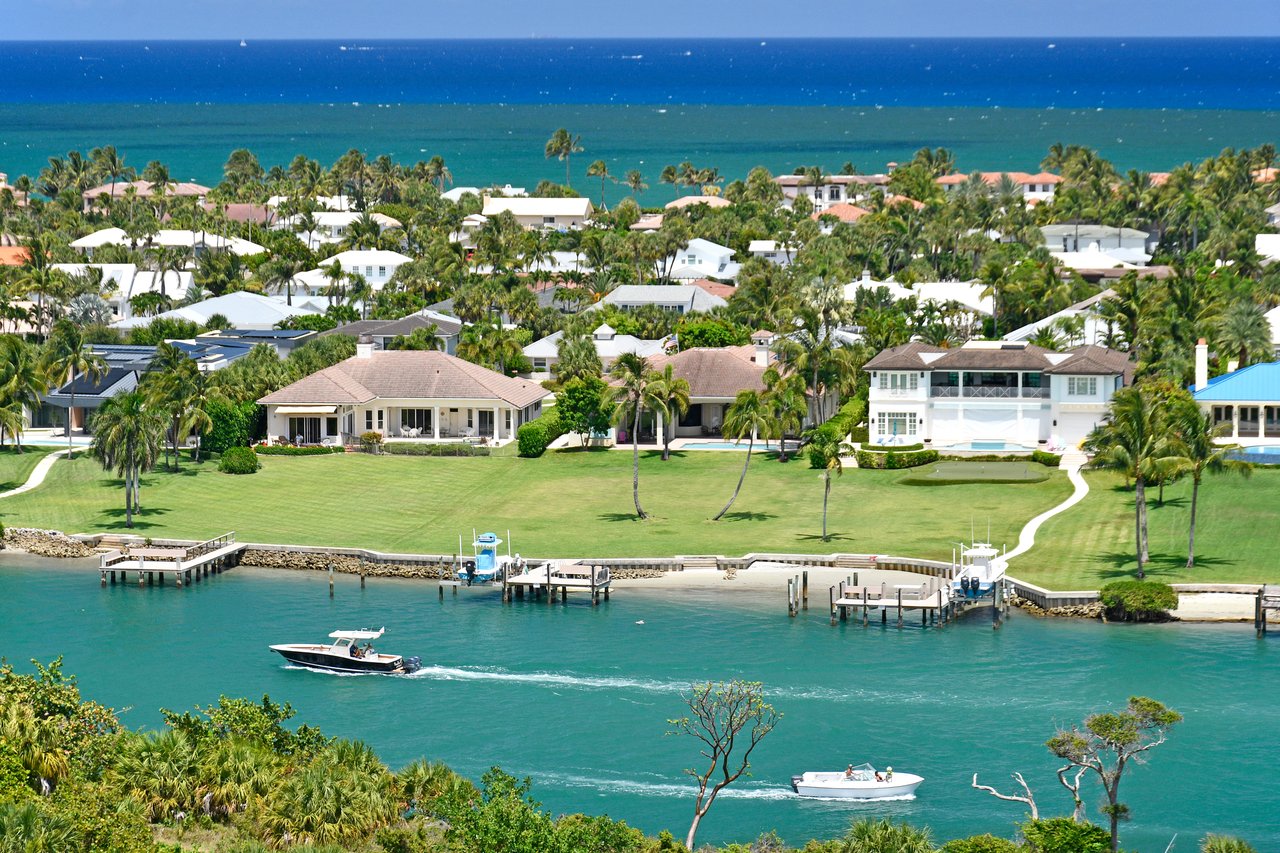
Waterfront in Jupiter is a wide category. A home on the Intracoastal, a home on a saltwater canal, and a home on the Loxahatchee River are three different lifestyles at three different price points, and the listing photos rarely tell you which one you are actually looking at. The view sells the house. The water access, the seawall, and the carrying costs decide whether you got a good deal.
This is the general waterfront buyer's guide. If you already know you want a deep water dock for a larger vessel, we have a separate piece on deep water and dockage. This one is for the buyer earlier in the search, sorting out what "waterfront" really means here before they fall for a specific address.
Quick answer: what to check before buying waterfront in Jupiter
Confirm the water type (canal, Intracoastal, river, or view-only).
Verify ocean access and whether any fixed bridges sit between the dock and the inlet.
Check dock depth at mean low water against your boat's draft.
Inspect the seawall and dock with a marine contractor, not just a home inspector.
Pull the FEMA flood zone and elevation certificate early.
Get actual flood and wind insurance quotes before waiving due diligence.
View Waterfront Homes For SaleSchedule a Consultation with The Wolfe Team
How much do waterfront homes cost in Jupiter?
There is no single number, because waterfront covers everything from a lake-view home in a gated community to a direct Intracoastal estate. As of April 2026, the broad Jupiter waterfront market showed a median listing price around $725,000 with most homes sitting roughly 64 days on the market (Redfin, April 2026). That figure spans condos, townhomes, canal homes, and single-family, so treat it as a floor-of-the-range signal, not a target.
Pricing climbs fast with the quality of the water access. Canal homes with ocean access sit at the more attainable end. Direct Intracoastal frontage and the Loxahatchee River addresses run well into the millions, and Jupiter Island oceanfront is its own tier entirely. The water type is the single biggest price lever on any waterfront search.
The word covers a few very different situations, and knowing which one you are looking at changes everything about price, insurance, and what you can do at the water.
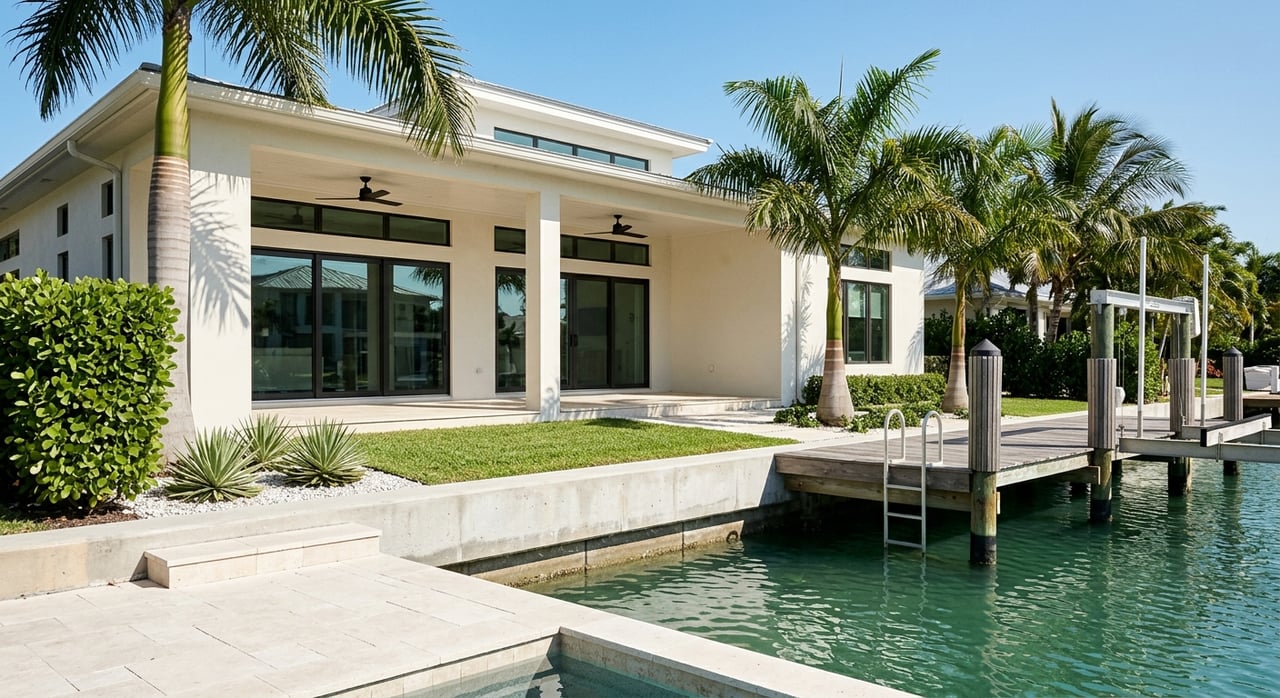
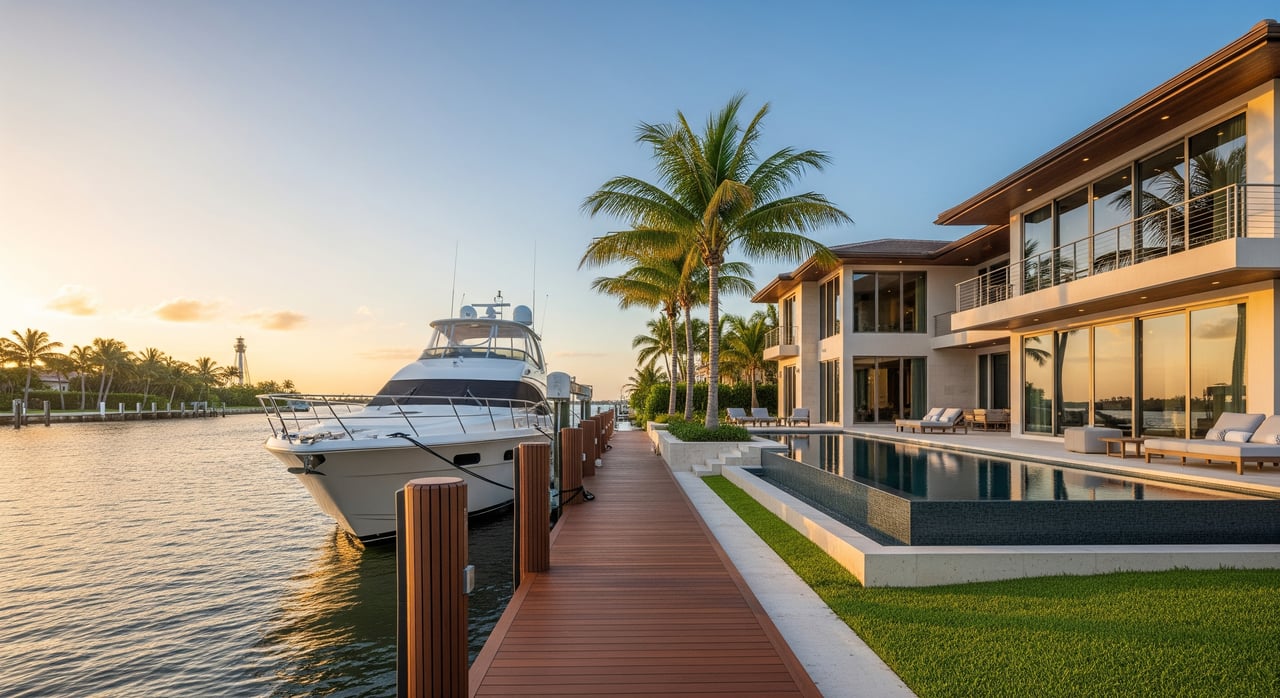
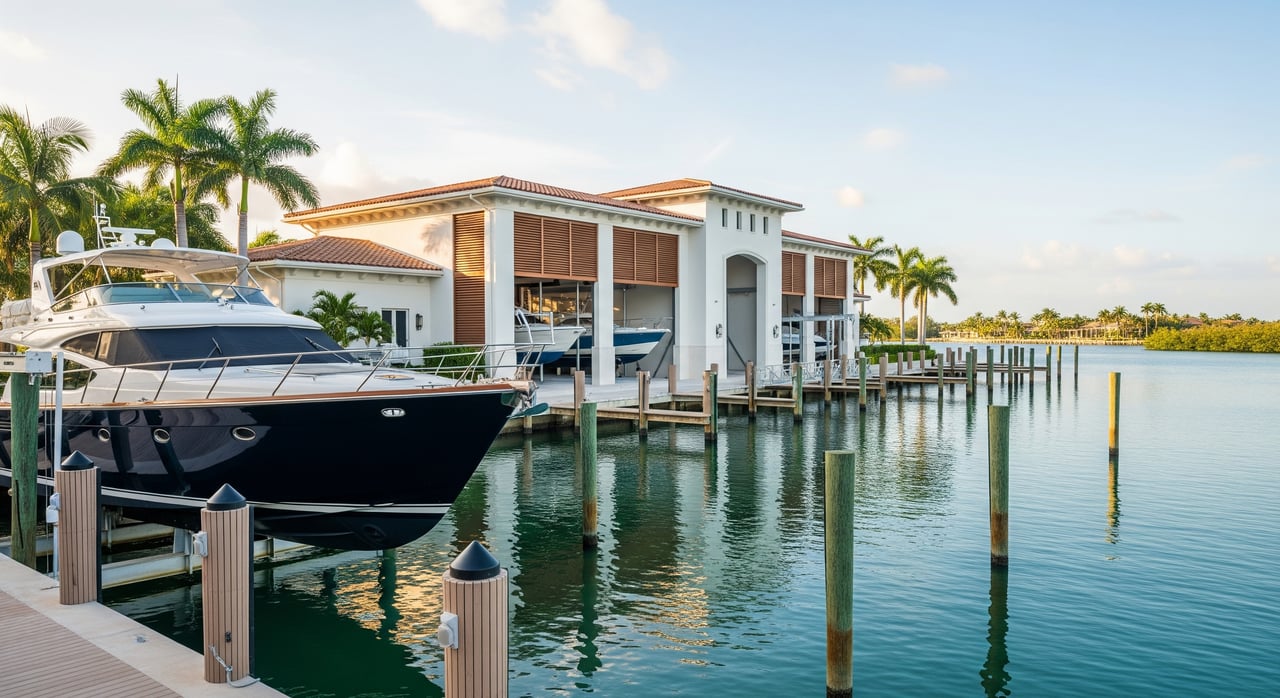
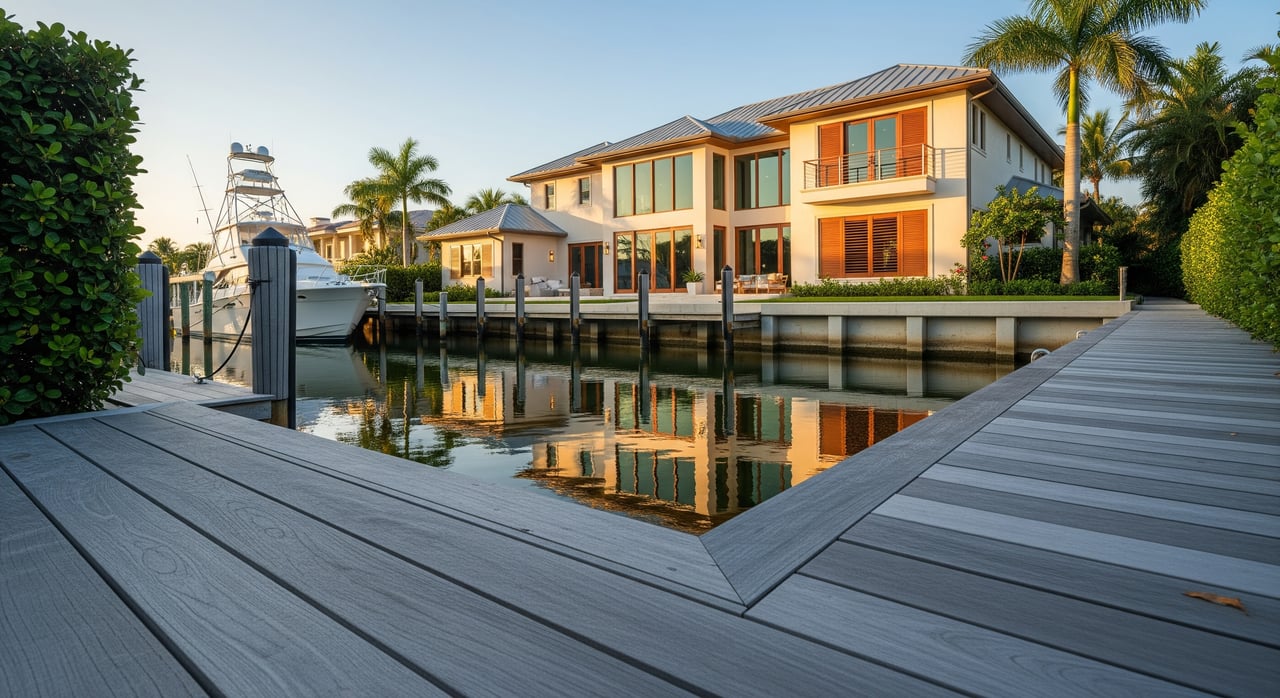
Saltwater canal. Many of these connect to the Intracoastal and out to the Jupiter Inlet. This is where you find the everyday boating lifestyle without a Jupiter Island budget. Canal width and depth matter here as much as the house.
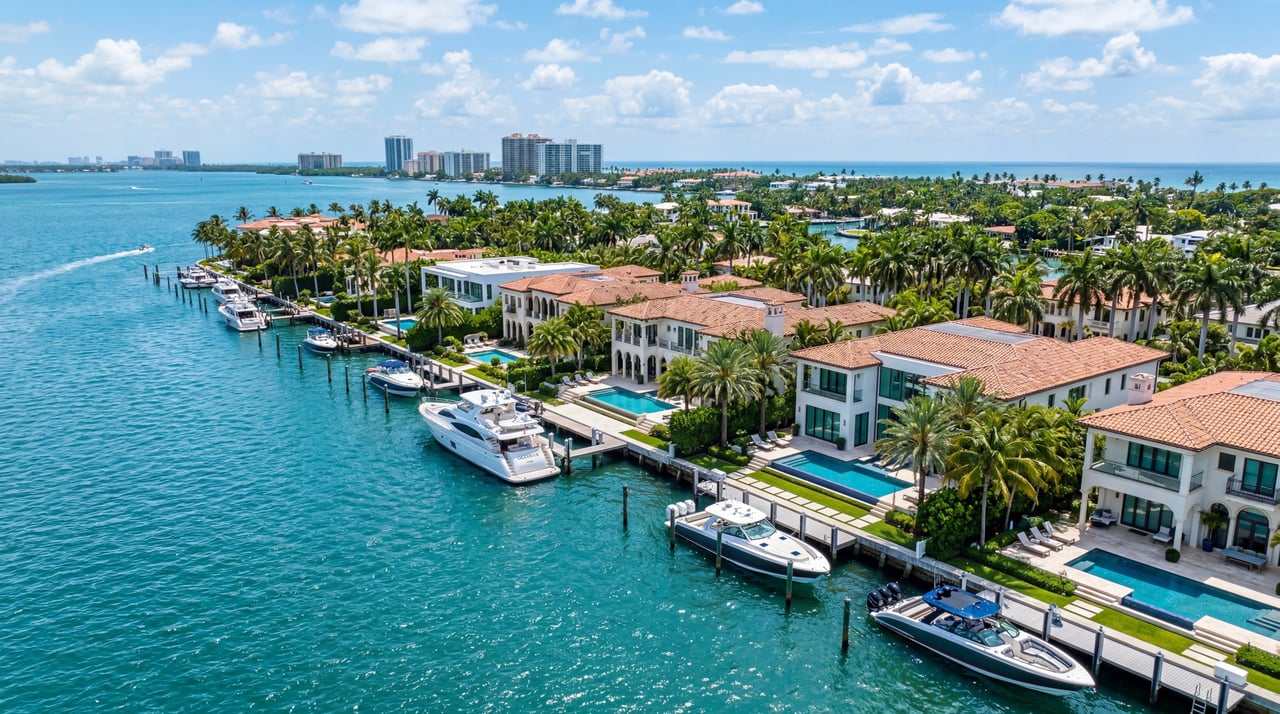
Intracoastal Waterway. Wider water, bigger views, bigger boats, bigger price. Direct frontage on the Intracoastal is some of the most sought-after real estate in Northern Palm Beach County.
Loxahatchee River. Beautiful, and a different boating reality. Some riverfront homes sit behind fixed bridges with height limits that cap the size of boat you can run out to the inlet (BeachesMLS market data, 2026). Gorgeous water, real constraints worth understanding before you commit.
One thing that catches buyers off guard: waterfront does not automatically mean boatable. Some homes offer the view and not usable boating access, and some are boatable only at certain tides or only for smaller vessels. Confirm what the water actually does before you fall for the backyard.
A note on listings: you will see lake-view and pond-view homes tagged as "waterfront" in the MLS. Some agents check that box for any home with water behind it, even when there is no boating access at all. It is not wrong, exactly, but it is not the same product as a canal or Intracoastal home. When you are filtering, read past the label and confirm the actual water type.
Does the home have real ocean access?
This is the question that separates a true Jupiter boating home from a pretty water view. The good news for buyers here: the majority of waterfront homes in Jupiter feature private docks with direct ocean access and no fixed bridges (BeachesMLS, 2026). That "no fixed bridges" phrase is the one to anchor on.
A fixed bridge between the home and the Jupiter Inlet sets a hard ceiling on your boat height at mean high water. If you run a center console, that may never matter. If you have a sportfisher or a sailboat, it is the whole ballgame. Two homes on the same stretch of water can have completely different boating realities depending on what sits between them and the inlet.
Before you get serious on any address, confirm three things: whether there are fixed bridges between the dock and the inlet, the clearance under any bridge at mean high water, and the route and run time out to the Jupiter Inlet. A local agent who actually boats these waters can tell you this faster than any listing remark.
The mistake we see most often: buyers fall for the view, then find out the water will not hold their boat. The fix is to start from the vessel and work backward. Buy the property that fits the boat, not just the dream.
Start with what you actually run. A jet ski or a center console asks very little of the water. A sportfisher or a sailboat asks a lot. Three numbers on your boat decide which homes are real options.
Draft. How deep the boat sits. Deeper-draft boats need more water, especially at low tide, so you are looking for adequate depth at mean low water rather than what the canal looks like at noon on a calm day.
Height. The tallest fixed point on the boat against the clearance of any bridge between you and the inlet. This is where fixed bridges end the conversation for taller vessels.
Beam and length. A bigger boat needs a bigger dock and a wider canal to turn and maneuver. A dock that technically fits the length does not help if there is nowhere to bring the boat around.
Then match the water type to that profile. Canal homes are usually the more attainable entry to the boating lifestyle, but the route to the ocean can include fixed bridges or shallow stretches, so the run out to the inlet matters as much as the dock itself. Intracoastal frontage is the prize for serious boaters, with wider water and, in much of Jupiter, no fixed bridges between the dock and the inlet. Oceanfront, somewhat counterintuitively, is often not boat-friendly at all, since there is rarely usable dockage. Plenty of beach owners keep the boat at a nearby marina instead.
Jupiter rewards getting this right. The inlet runs quick to open ocean, the dock-and-dine scene is real, the weather cooperates year-round, and the Bahamas sit only about 60 to 70 miles out. We go deeper on bridge clearances and the specific boating neighborhoods in our full boat-ready buyer's guide, which is worth reading alongside this one if a dock is non-negotiable for you.
The house gets the same inspection any home gets. The water side is where waterfront buyers get surprised, and it deserves its own due diligence.
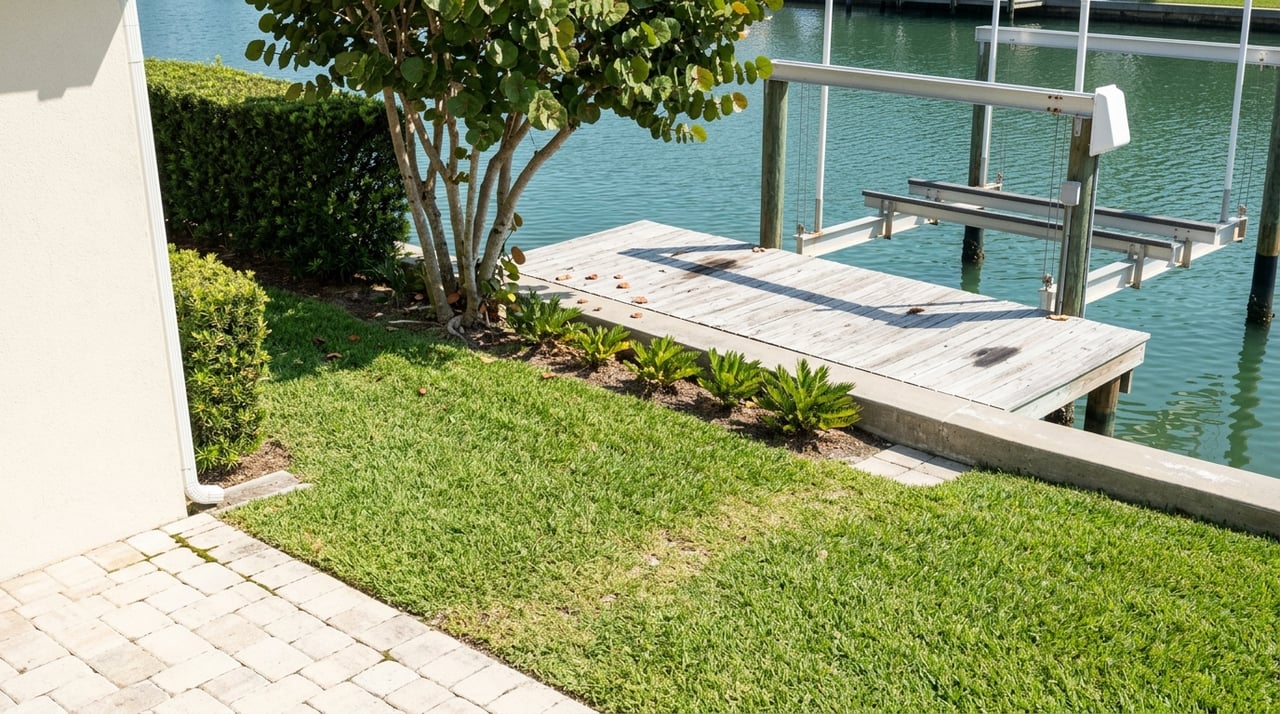
The seawall. Most Florida seawalls were built decades ago, and a lot of them are at or past their design life. A wall that is bulging, cracking, or showing sinkholes in the yard behind it is a real number, and replacement is not cheap. Get a marine contractor to look at the seawall and pilings, not a general home inspector. Confirm who owns and maintains the wall, especially on canals where responsibility can be shared.
The dock, lift, and pilings. Confirm the dock and any lift were permitted, and that the permits are current. An existing structure is not automatically legal or replaceable in kind just because it is sitting there. Ask for the permits in writing.
Dock depth at low tide. Verify the actual depth at mean low water against your boat's draft, on the home you are buying. A dock that looks fine at high tide can leave your boat on the bottom twice a day.
Elevation and flood zone. Pull the FEMA flood zone and ask for an elevation certificate early in the contract period, not at the end. The zone drives your insurance and your rebuilding rules, and finding out late creates rushed decisions.
Plan on it, and get real quotes early. Nearly every Florida waterfront home sits in a FEMA flood zone, most commonly Zone AE (high-risk floodplain) or Zone VE (coastal high hazard, with wave action on top). VE is the more expensive designation.
Across Florida waterfront markets, annual flood premiums commonly run in the several-thousand-dollar range and climb from there on higher-hazard or lower-elevation homes (Florida waterfront insurance guidance, 2025 to 2026). Two homes on the same street in the same zone can carry very different premiums based on elevation, so the only number that matters is the actual quote on the specific home.
A few things move the premium in your favor: an elevation certificate showing the structure above base flood elevation, impact windows, a newer roof with proper hurricane attachment, and documented wind mitigation features. Get an actual flood and wind quote from a carrier before you waive due diligence, not an estimate. On a waterfront home, insurance is often the largest line item after the mortgage itself, so it belongs in your budget from day one, not as a closing-week surprise.
What does it cost to own waterfront beyond the mortgage?
The sticker price is the headline. The carrying costs are the story. Budget honestly for flood insurance, homeowner's and windstorm coverage, and the upkeep that saltwater demands: seawall and dock maintenance, lift servicing, and more frequent attention to anything metal or exterior. Saltwater pools and waterfront landscaping ask a little more than an inland yard.
None of this should scare a serious buyer off. It is simply the trade for waking up to the water. The buyers who are happiest a year in are the ones who knew the full number going in, not just the offer price.
Inventory and competition shift with the season here. Winter is the busiest stretch, with snowbird demand and the strongest luxury activity, which means more to choose from and more buyers in the room. Late spring thins the listing count but keeps the serious buyers in play. Summer runs local-heavy and slower, which can open value opportunities for a buyer who is ready to move while others are waiting out the heat. Fall is when sellers prep and inventory resets ahead of season.
There is no universally "right" month. The right time is when the correct home shows up with the water access, the seawall, and the numbers all lined up. A waterfront search rewards patience and readiness over timing the calendar.
Fall in love with the property after you understand the water, not before. Know which kind of waterfront you are actually buying, confirm the ocean access and any bridges, inspect the seawall and dock with a marine professional, and get your flood and wind quotes in writing early. Do that homework and waterfront in Jupiter is one of the best moves you can make. Skip it and the dream turns into a line of surprises.
That homework is most of what we do for waterfront buyers. If you are starting to look, send us the neighborhood or even a specific address and we will tell you what the water actually does there, before you get attached.
View Waterfront Homes For SaleSchedule a Consultation with The Wolfe Team























Experience the Magic of the Palm Beach Holiday Boat Parade






It's officially our favorite time of the year in Jupiter.

Strategic Marketing, Clear Communication, and Experience have consistently placed Erica Gouldy Wolfe, and now the Wolfe Team, among the top professionals in the real estate industry. Utilizing the latest technologies and marketing strategies they are raising the bar in the industry, all while raising the views on your home.