What It Really Costs to Own a Home in Northern Palm Beach County
Cost category | Who pays it | How much it varies |
|---|---|---|
Property taxes | Everyone | A lot, and it usually resets when you buy |
Homeowners and wind insurance | Everyone | The widest range of any line item |
Flood insurance | Depends on zone and lender | Wide, and not only near water |
HOA, POA, or condo fees | Depends on the community | From zero to the largest line on the list |
Club or membership dues | Country club and some coastal communities | Often the single biggest surprise |
Maintenance and reserves | Everyone | Roof, AC, pool, landscape, salt air |
Utilities and water | Everyone | Higher than most northern buyers expect in summer |
Search For HomesSchedule a Consultation with The Wolfe Team
The mortgage payment is the number everyone plans around. It is almost never the number that surprises people.
We see the same conversation every season. A buyer moves down from the Northeast or the Midwest, does the math on the purchase price, feels good about it, and then opens the first full year of bills. The mortgage was exactly what they expected. Everything underneath it was not.
None of it is bad news. Plenty of it works in your favor compared to where you came from. But you should walk into a purchase in Jupiter, Palm Beach Gardens, Tequesta, North Palm Beach, or Stuart knowing what the carrying cost actually looks like, not just the payment.
Here is the honest breakdown, category by category.
Florida has no state income tax. That is real, and for a lot of families relocating from a high-tax state it is the biggest single financial reason they move.
Property taxes are where the picture gets more complicated, and it is not about the rate. It is about the reset.
Florida caps how fast the assessed value of a homesteaded property can rise each year. That protection is why a neighbor who bought fifteen years ago can be paying dramatically less on a nearly identical house. When a property sells, that protection generally ends and the assessment resets toward current market value for the new owner.
So the tax line on the current listing is not your tax line. This is the most common budgeting mistake we see, and it can be a meaningful monthly difference.
Two things to do:
We do not give tax advice, and you should not take tax advice from a real estate site. Get the numbers, then take them to your accountant.
Homeowners insurance is the cost that varies most from house to house, and it varies for reasons that are not obvious from a listing photo.
What moves the number:
Roof age and material. This is the biggest driver. A newer roof, especially one built to current code, can change your premium substantially. An older roof can affect whether you get a competitive quote at all.
Wind mitigation features. Impact windows, shutters, roof-to-wall connections, and a documented wind mitigation inspection all help. A house that has these and can prove it prices very differently than one that has them and cannot.
Construction type and year built. Post-2002 construction generally reflects a stronger building code.
Flood zone. Separate policy, separate decision, and not limited to homes on the water. Drainage and elevation matter as much as proximity. Some inland properties carry flood requirements that surprise people, and some near-water properties carry less than expected.
Pools, docks, and outbuildings. Each adds coverage considerations.
The practical rule: get real insurance quotes during your inspection period, on the actual address, before your contingencies expire. Not an estimate, not a rule of thumb. On a luxury or waterfront purchase this matters even more, because the range between the best and worst quote on the same house can be large.
This is where two houses at the same price can have completely different monthly costs.
No association. Common on acreage and in some older neighborhoods. Zero dues, and everything is on you. See our companion post on buying acreage for what replaces the dues.
HOA or POA. Covers common areas, gates, sometimes landscaping or a community pool. Ranges from modest to significant.
Condo association. Usually the highest, because it covers the building envelope, insurance on the structure, and reserves. Florida condo law now requires stronger structural reserves and milestone inspections on qualifying buildings, which has pushed condo budgets up across the state. This is important and it is knowable: request the association's financials, the reserve study, and the minutes, and read them. A building with healthy reserves and completed inspections is worth more than one with low dues and a special assessment waiting to happen.
Club and membership dues. In country club communities, membership may be mandatory, and there may be an initiation cost as well as annual dues, food minimums, and cart or trail fees. Some communities are equity, some are not. These are large numbers and they belong in your budget from day one, not after you tour.
Ask for the full fee schedule in writing. Ask what has changed in the last three years. Ask whether any assessment is pending.
The climate is the best part of living here and it is also the reason maintenance runs differently than it did up north.
Air conditioning. It runs most of the year. Systems work harder and get replaced sooner. Budget for service twice a year and for eventual replacement.
Roof. Sun and storms shorten roof life. Know the age and the material when you buy.
Salt air. Anywhere near the coast or the Intracoastal, salt is working on your hardware, screens, outdoor kitchen, hinges, and railings. Homes closer to open water need more frequent attention to exterior metal.
Landscape. Things grow fast. Twelve months a year. Whether that is a hobby or a service contract is your call, but it is not a seasonal cost the way it is in the Northeast.
Pool. Weekly service, chemicals, pump, heater. Common enough here that people forget to budget for it.
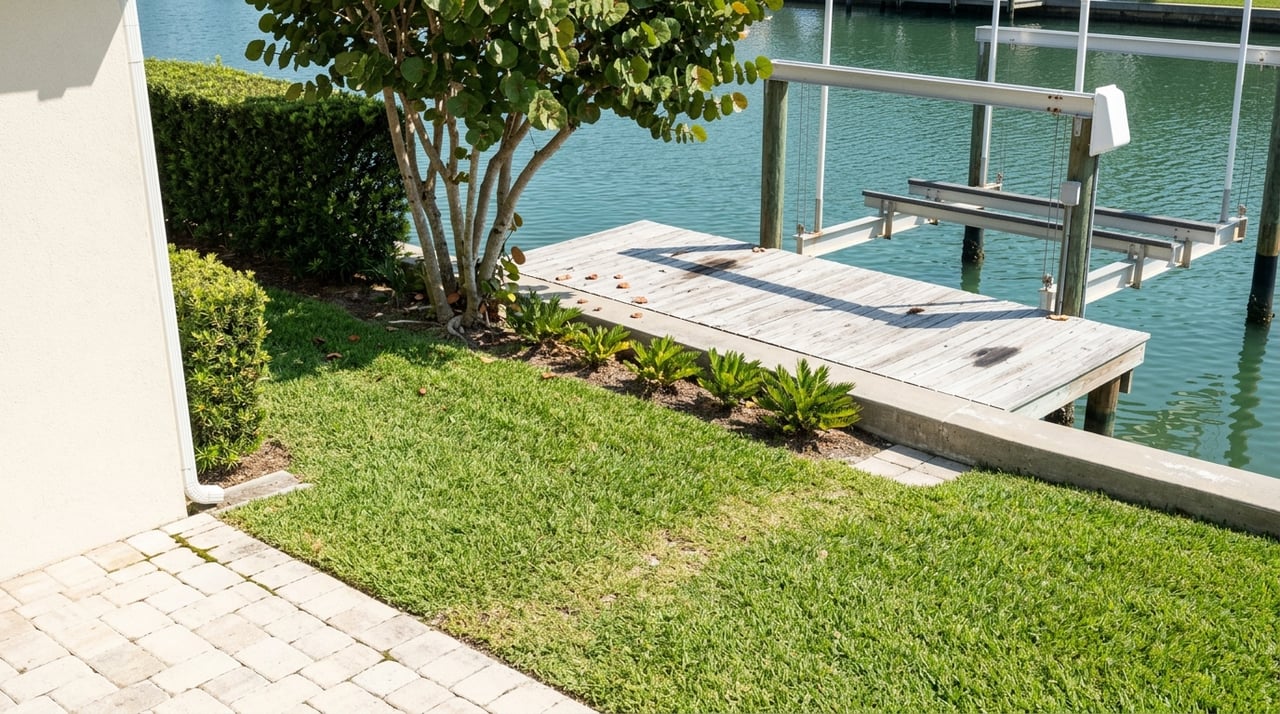
Docks and seawalls. If the property has them, they are structures with lifespans, and they should be inspected like any other structure.
The offset is real, though: no snow removal, no heating oil, no winterizing, and no ice damage. Many buyers find the maintenance total is not higher than what they left. The categories are just different.
Summer is the mirror image of a northern winter. Electricity peaks from roughly June through September while the AC runs. Irrigation adds water cost, though many acreage and larger-lot properties irrigate from a well, which changes the equation.
Nothing here is dramatic. It just runs opposite to what you are used to, so a January utility bill will make you feel great and an August one will not.
Oceanfront or Intracoastal condo | Gated single family | Non-association single family | Acreage | |
|---|---|---|---|---|
Association or dues | Highest | Moderate to high | None | None, or minimal road agreement |
Structure insurance | Largely through the association | You | You | You, plus outbuildings |
Flood consideration | Often significant | Zone dependent | Zone dependent | Zone dependent, drainage matters |
Maintenance you control | Interior only | Most of the property | All of it | All of it, plus well and septic |
Biggest watch item | Reserves, milestone inspection status, assessments | Club or mandatory membership dues | Roof and AC age | Well, septic, and drainage |
Best fit | Lock and leave, seasonal owners | Buyers who want services handled | Buyers who want control and lower fixed costs | Buyers who want space and will do the work |
A short list that prevents almost every carrying-cost surprise.
If you want this run for a specific property or a specific neighborhood, message us. We will pull the current numbers for that address and put them in one place so you are comparing houses on the real cost, not the asking price.
Is it expensive to own a home in Palm Beach County? It depends far more on property type and community than on the county. A condo with high reserves and a country club home with mandatory membership can carry very differently than a non-association house at the same price. The purchase price tells you less than the fee structure does.
Will my property taxes match what the seller pays now? Usually not. Florida's assessment cap protects long-time homesteaded owners, and that protection generally does not transfer to a new buyer. Budget from an estimate based on your purchase price and confirm with your accountant.
Do I need flood insurance if I am not on the water? Sometimes yes. Flood requirements follow zone, elevation, and drainage, not just distance to water. Check the specific parcel rather than assuming.
Why are condo fees higher than they used to be? Florida now requires stronger structural reserve funding and milestone inspections for qualifying buildings. Many associations raised dues to comply. A building that has done this work is generally in better shape than one that has not, even though its dues look higher.
What is the most common budgeting mistake out-of-state buyers make? Two of them. Assuming the seller's tax bill is theirs, and skipping real insurance quotes until after the inspection period closes.
Is a country club home worth the dues? For the right buyer, easily. For someone who golfs twice a year, no. The dues are not a small rounding error on the purchase, so decide honestly how you will use it. Our country club comparison guide walks through how the main clubs differ.
Does acreage cost less to carry? Not necessarily. You typically trade association dues for well maintenance, septic service, larger landscape costs, and insurance on outbuildings. Our acreage comparison covers what that shift looks like.



































Experience the Magic of the Palm Beach Holiday Boat Parade







It's officially our favorite time of the year in Jupiter.


Strategic Marketing, Clear Communication, and Experience have consistently placed Erica Gouldy Wolfe, and now the Wolfe Team, among the top professionals in the real estate industry. Utilizing the latest technologies and marketing strategies they are raising the bar in the industry, all while raising the views on your home.